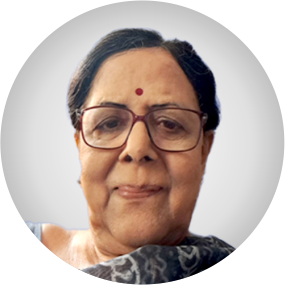
Message from President ISHBT
Dear Delegates,
The Indian Society of Haematology and Blood Transfusion, founded in 1973 by our very learned and respected predecessors is now 52 years old with a long tradition of nurturing the subject of haematology all over the country. The main aim was to promote excellence in patient care, research and education in the fields of clinical, laboratory haematology and transfusion medicine till the latter decided to form their own body and separated themselves from the parent body. At the same time the subject of haematology underwent a tremendous expansion with the inclusion of genetic medicine, molecular and immunological branches of medicine with relation to haematological disorders. The treatment of haematological disorders was also gradually becoming more precise and target oriented with the inclusion of newer diagnostic tools. More technology-oriented procedures like Stem Cell Transplantation, CAR-T Cell Therapy, Gene therapy and gene editing were becoming more commonly available to the public. Besides helping in the building of institutions of excellence, another important service rendered by ISHBT is dissemination of knowledge for doctors by holding regular conferences, updates, workshops and symposia all over the country to make it available to all doctors near and far. The international collaborations set up between ISHBT and American Society of Haematology and European Society of Haematology also provide a platform to discuss the latest of research and information directly to our doctors in India. The Indian College of Haematology, the academic wing of ISHBT also helps the government to formulate guidelines, give fellowships to the esteemed members with good contribution in the field of haematology. Besides the Indian Journal of haematology and Blood Transfusion helps to nurture local scientific aspirations as well as from distant countries We know that India is a big country and in spite of the good work done by our predecessors and ISHBT, the subject of haematology is mainly restricted to the large and metro cities. It is difficult to get trained haematologists for teaching in medical colleges which are coming up in tier two cities or outside. Similarly, there is a dearth in the availability of practising haematologists in the private sector to look after the general public. It is difficult to get good infrastructure for treating haematological patients in hospitals situated in smaller cities and towns. Availability of good blood banks catering to the needs of these patients is another problem area which is not only due to lack of willingness to donate blood in the general public, but also due to the lack of trained manpower. Considering all these problems, we decided to spread the message of haematology to the smaller cities and peripheral areas, whether be it medical colleges or general practitioners practising in the area. In other words, if we thought of the spread of haematology in India in the form of form of a pyramid, then now we have to think of spreading farther laterally away from the top of the pyramid to lower and broader growth areas in order to bring uniformity of knowledge dispersion throughout the country.
Keeping this in mind, we decided to formulate our future plans for this and future years. The plan has been well elucidated by our secretary Sri T. K. Dolai in our last newsletter. In short, this would entail i) carrying out all past activities including conferences, masterclasses, CMEs and updates, publishing of the prestigious journal etc which were carried out earlier. Apart from that, ii)regular Updates and seminars in smaller cities and towns involving local haematology organisations, iii)to prepare a teaching module for undergraduate students where teachers trained in haematology are not available locally, iv)completion of guidelines for the treatment of haematological diseases, v)open a central library facility and to where journal articles on haematology can be easily procured by doctors living in far flung areas where library facilities are not easily available, vi) better utilization of the ISHBT office and to continue with the outreach programmes as many as we can.
I would like to end my message by thanking you sincerely for electing me to the office. I hope that my contribution, however small, will help to make ISHBT a democratic and more member-friendly organization.
Thank you.
Regards,